


By Selwyn Duke
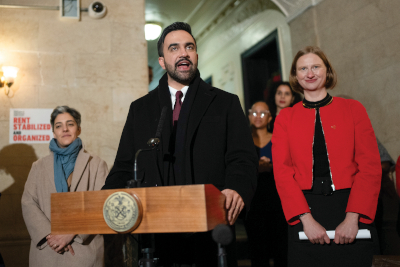
“My skin literally crawled,” said the shocked New York City Council member in early January. What so shook Vickie Paladino, a rare Republican in the Big Apple Legislature, was a comment Mayor Zohran Mamdani made in his inaugural address. It was so eyebrow-raising, in fact, that an editor of mine at first thought it was satire.
“We will replace the frigidity of rugged individualism,” Mamdani said on Thursday, January 1, “with the warmth of collectivism.” My, that’s quite the New Year’s resolution.
Oh, it’s not as bad as stating, let’s say, that your end goal is “seizing the means of production.” Mamdani made that statement, too — while addressing supporters in 2021.
It all reflects how the new mayor certainly is historic, much as how the Great Chicago Fire, the fall of Rome, and the Black Plague were. Mamdani has become not just the youngest and the first Muslim, South Asian, and African-born New York City mayor, but also the first to be an avowed socialist and make that central to his campaign. Additionally, there was no other Big Apple head who’d been a noncitizen just seven to eight years before attaining power. And then there’s his rhetorical ability.
Mamdani might not long ago have been a noncitizen, but he can’t be accused of being a non-entity. As with Benito Mussolini, he’s a remarkable orator, so syrupy smooth, smiley, and silver-tongued that his style can obscure his substance. Yet at least partially because he has had to appeal to the party that fueled his rise, the radical Democratic Socialists of America, he has often had to show his true colors. In fact, aside from the aforementioned communist dogmas, he has echoed another: that the “abolition of private property” is “preferable” to the status quo. This is, of course, part of collectivism, too — that of real estate.
Now, Mamdani’s collectivism comment did inspire much conversation and controversy. Some observers were horrified, while others tried to justify. Consider, for instance, Bishop Robert Barron of the Diocese of Winona-Rochester, Minnesota. Aghast, he wrote on X January 2:
Collectivism in its various forms is responsible for the deaths of at least one hundred million people in the last century. Socialist and Communist forms of government around the world today — Venezuela, Cuba, North Korea, etc. — are disastrous. Catholic social teaching has consistently condemned socialism and has embraced the market economy, which people like Mayor Mamdani caricature as “rugged individualism.” In fact, it is the economic system that is based upon the rights, freedom, and dignity of the human person. For God’s sake, spare me the “warmth of collectivism.”
Responding to this was another self-identified clergyman who on X goes by “Fr. Paul.” “Is the church not a community?” the priest tweeted. “Is individualism in relationship with Christ and with others not also the death of Christianity? Respectfully, your excellency, I think you’re reading a bit too much into this.” But is he?
The term “collectivism” certainly is in style. A chart on EtymOnline.com reveals that the word’s frequency of use exploded during the Great Depression, peaking around 1940. It then began declining, reaching a 50-year low in about 1980. It subsequently started increasing again, and by 2019 (the chart ends there) usage frequency had surpassed even 1940 levels.
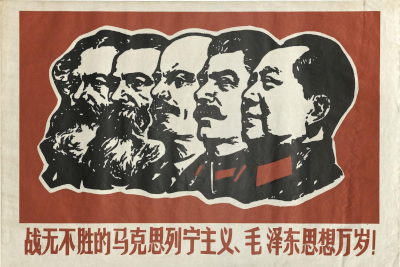
But in style or not, collectivism’s origins are clear. The term, or its French equivalent, collectivisme, first emerged in the mid-19th century in socialist and anarchist circles. It was later popularized in Marxist and anarchist contexts. Quite simply, it is a communist word.
And Zohran Kwame Mamdani is a communist. When you speak approvingly of “collectivism,” “seizing the means of production,” and private-property abolition, well, as is said, “If it walks like a duck…” You know the rest.
Oh, Mamdani does call himself a “Democratic Socialist.” Yet know here that communists often call themselves and their creations “socialist.” Why, Russian Revolution author Vladimir Lenin primarily described himself and his faction as revolutionary socialists or “social democrats” while seeking power — and his dark creation, the USSR, stood for the Union of Soviet Socialist Republics.
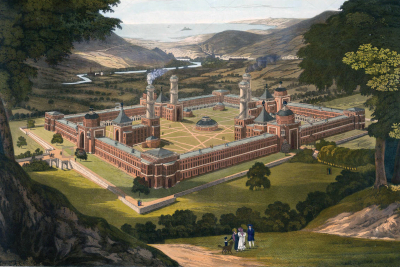
And the Soviet Union, and socialism, essentially stands for something else, as well: failure. The ideology has a much longer history of such than many may suppose, too — going back to at least 1825. It was then that Scottish “reformer” Robert Owen, often called “The Father of English Socialism,” instituted a collectivist commune in New Harmony, Indiana.
It was visibly failing, miserably, within 12 months, and began dissolving after just two years.
Unlike the 19th century’s many religious communes, which sometimes endured for decades or even more than a century, the Owenite commune had neither the profit incentive nor the God incentive. Consequently and predictably, its “residents lacked the motivation to work,” related the MacIver Institute in 2020, “while its government was unable to manage even the town’s one general store.” The Owenites’ inability to manage a single store despite New Harmony having only 800-900 residents raises a question, too: How will Mayor Mamdani successfully manage government-run grocery stores (also on his agenda) in a metropolis of 8.48 million residents?
He won’t, of course. City-run grocery stores have already failed (a couple were ultimately leased out to private entities) in places such as Baldwin, Florida, and Erie and St. Paul, Kansas. This, not to mention the interminable food lines and shortages in socialist/communist “utopias” such as the USSR and Venezuela.
The one virtue of Owen’s experiment, however, is that it was voluntary — not so with what the world’s Mamdanis have planned. It’s ironic, too. Figures such as Karl Marx and Friedrich Engels acknowledged Owen as a key utopian socialist precursor. Yet instead of realizing that only his failure was scalable, they apparently supposed that some imaginary success was. And we’ve seen this movie before; we know the ending.
Just consider the story of Lily Tang Williams, who grew up in Communist China and experienced its tyranny and privation firsthand. What follows is part of her story, from a Heritage Foundation (HF) panel held in December 2021. (I’ve had to excerpt the most relevant parts due to space constraints. Note also that it’s a verbatim transcript provided by HF, and partially in pidgin English.) As HF relates, Lily said:
I was born in Chengdu, Sichuan province right before Mao [Tse-tung] started the Great Proletarian Cultural Revolution. And my parents were illiterate workers. We should be the … workers rule society. Everything’s free, right? No, that’s what our kids think today. It was not free except our horrible primitive workers’ row house provided by my dad’s state factory. Everybody work for state factory six days a week, and our community housing, probably nobody in this country wants to live in there. It’s eight families with children share one bathroom. I share one water faucet. And if water is out, you cannot cook. It was very cold in the winter because the central planners in Beijing said, “After you live, if you live in south of Yellow River, no heating.” So I had frostbite on my left foot. Every year I got infected because of the cold weather.
… They even control the songs you’re going to see and what comedy you are allowed to tell. And the girls, boys were not allowed to talk about romantic love and to talk about, “Oh, I love my parents,” because Chairman Mao is more dear.
… It’s like a concentration camp. 6:30 in the morning…. Because my dad’s community housing, it’s next to my high school and middle school. So 6:30 in the morning, the speaker come up, “Time to wake up, time to go school, time to go work. Long live Chairman Mao. Long live the Communist Party.”
The above is what socialists don’t tell you when marketing their agenda. But then there’s something that may sound familiar. As Lily stated a bit later:
Mao divided people into two big groups like Marx did, oppressor versus oppressed…. Who are the oppressors? Landlord, rich capitalist, right [inaudible 00:07:04] and counter-revolutionaries and bad influencers. And who define those arbitrary words to put them under black classes? The party. Mao. 20 million people died during Mao’s Cultural Revolution. Lots of them are professors, teachers, intellectuals who just dissident, represent different opinions about countries, policies and the propaganda every day.
Ah, “landlords.” Mamdani has also targeted them, talking about “taking control back” from landlords. (Back? That implies government had control in the first place. What he really means is seizing their freedoms and, maybe, their property.) Even more alarming are comments made by his “tenant advocate” appointee, Cea Weaver. “Impoverish the ‘white’ middle class,” she wrote on X in 2018. “Homeownership is racist” — “failed public policy.” Though her own very white mother has a $1.4 million house, she has called home ownership “a weapon of white supremacy.” “We’ll transition from treating property as an individual good to a collective good,” she further vowed. “Whites especially will be impacted.” She could be very pithy, too, also writing in 2018, “Seize private property!”
But, wait, this racial focus isn’t at all like the rhetoric of the Maoists, Soviets, or any other “traditional” communists, is it? Yet the difference is one of situation, not conviction. Chinese, Soviet, and other earlier socialists operated within relatively homogeneous nations, and racial/ethnic appeals are fruitless when most everyone is the same race and ethnicity. These lands were also relatively poor, however, with a great have/have-not divide, so the class-warfare card was ideal. In the United States today, we’re relatively wealthy but also quite balkanized (aka “diverse”). So while class warfare still pays dividends (“No more billionaires!”), the race card is invaluable. The principle, though, is precisely the same: Demonize those possessing the wealth, whose economic power you want for yourself. Then you can justify expropriating those resources from “the top 10 percent” (and, ultimately, others) and transferring them to the top one-tenth of one percent — the government puppeteers.
Speaking of which brings us back to Lily’s story. China’s government puppeteers, she said, dictated that
you cannot talk about other things. It’s all about politics. It’s all about PC. If I go to exercise, I have to write in my diary “I’m exercise today because Chairman Mao wants me to be healthy and serve the country.” Think about that. Politics is in your face every day, and you are not human being. You are not allowed to ask questions. You’re not think for yourselves.
… I was hungry. We had to live on food rationing coupons based on your parents’ worker status inside of the state factory…. And my dad, even though he was a Communist Party member, but because he was illiterate, he cannot move up. And he was in China that time fighting his Communist Party bosses because they treated him like an animal, even though he’s a worker. Supposed to be workers rule, right?
That’s what I’m saying to the young people today. They will put you up and sell you something. And the problem is free stuff, and they will never come. And instead, 95% of people, I will say, equally poor and equally enslaved.
Lily mentioned, too, that her conditioning ran deep. It “took me 20 years in this free country [America] to get rid of all my indoctrination, to say my own old government lied to me,” she confessed. “And I even did not know 40 million people died of starvation because of their central planning policies.” Lily then issued a challenge to Americans:
I summarized 12 features [of] Mao’s Cultural Revolution on my Facebook, Lily 4 Liberty. You can judge yourself those 12 features, Mao’s tactics and features are so similar with today what is … going on on American soil, including looting, burning, changing names, censorship, cancel culture, self-censorship. And you can be losing your job and business by your past words, by your past deeds. And neighbors, families, the divisioning of society. It’s very, very scary.
Lily, though, was downright blessed compared to some of communism’s other victims. Just consider the story of Xhemal Kaloshi, arrested in 1947 in communist Albania with, as he put it, no “explanation, no crime, no warrant.” He wrote, related the Victims of Communism Memorial Foundation in December:
When my turn came, I was thrown into a basement, tied, without food or bedding. The following day I faced the chief of security. “Confess your crimes,” he ordered. I had none. My denial enraged him. He kicked me so hard in the shin that I collapsed unconscious on the concrete floor. That blow nearly shattered my leg, and for hours I lay close to death. But I refused to sign the confession he had prepared.
At my trial, the verdict was already written. Witnesses, pressed or bribed, testified against me. I was labeled a fascist, a collaborator, a propagandist.… I was guilty not of deeds, but of existing in a political system that needed enemies.
From prison, I was transported with thousands of other prisoners to the swamp fields of Maliq, (a small town in southeast Albania, not too far from Lake Ohrid) to the labor camp of Vllocisht modeled after the concentration camp of Dachau in Germany. It was a camp designed not to reform nor re-educate prisoners, but to crush, a camp where survival was the only victory. There, human life was treated as expendable material, useful only so long as it could dig canals and marshes through mud. This was forced labor.
The conditions defy imagination. We were forced to work from Monday-Saturday between the hours of 4:00a.m.-7:00p.m., barefoot, clad in rags, freezing in the highland cold. Tools were scarce and broken; often we tore at the swamp with our bare hands. The mud cut our flesh, thorns shredded our skin, and lice swarmed over our bodies. Later, the authorities set quotas: each man was to dig five cubic meters of earth daily. Those who lagged were beaten and tortured mercilessly.
If anything, Kaloshi’s story only gets worse from there, too. Oh, by the way, the man’s country would eventually take on the name the People’s Socialist Republic of Albania.
Despite all this, socialism continues winning converts to this day. What’s in a word? Much, and “socialism” sounds, well, social. (It may seem silly, but branding is effective for a reason.) Moreover, the socialist siren call is seductive precisely because it presents a truth, but socialism fails because it doesn’t present The Truth. That is, it peddles truths out of context, without the other truths that would provide balance.
Consider Mamdani’s entire collectivism-warmth passage. If Big Apple communities have for too long “existed as distinct from one another, we will draw this city closer together,” he promised. “We will replace the frigidity of rugged individualism with the warmth of collectivism. If … the people of New York yearn for solidarity, then let this government foster it.” Now, it actually was fine that the mayor mentioned “solidarity.” Note here that a movement by that name in 1980s Poland was anti-communist (and was persecuted by Mamdani’s ideological forebears).
Solidarity is, in fact, a Christian principle. Yet something was missing from the mayor’s appeal. It’s the same thing socialists/communists always omit, and it reminds me of what G.K. Chesterton noted in his 1908 book Orthodoxy. In the modern world, the philosopher warned, the “Christian virtues … have gone mad because they have been isolated from each other and are wandering alone. Thus some scientists care for truth; and their truth is pitiless. Thus some humanitarians only care for pity; and their pity (I am sorry to say) is often untruthful.”
Likewise, it’s not just that, as good theology informs, “solidarity” merely means working together for a common good; it doesn’t necessarily imply government involvement (unlike collectivism). It’s also that it’s meant to be balanced by subsidiarity, a Christian principle dictating that decisions and actions must occur at the lowest appropriate level (e.g., individual, family, local community). Put simply, you don’t escalate to the central government what the locals can accomplish, or to municipal authorities that which is the family’s domain. But this isn’t what Mamdani believes. As he said in his victory speech in November, “We will prove that there is no problem too large for government to solve, and no concern too small for it to care about.” Translation: No issue is little enough to not be big government’s business. (What’s more, he also tacitly deified government there, as only an omnipotent, omniscient entity could solve any and every problem.)
Really, though, some may wonder, aren’t these warnings a bit fevered? Mamdani won’t be the next Stalin, Mao, or Pol Pot. But don’t confuse will with means; while the mayor will be limited by representative institutions, we can’t read his heart and mind. We do know, however, that he and his comrades would take socialism national. We can also know that because “Socialism requires extensive government control, it naturally expands state power at the expense of individual rights,” as the Adam Smith Institute wrote last year. “Tyranny is not an accidental by-product of Socialism; it lies at its very core. It is in its DNA.”
It’s important to fully explain, too, why this state control is necessary: Socialists are literally trying to trump nature without any moral imperative for doing so. That is, socialism demands equality, but nature’s default is inequality. To analogize it, imagine you tried thwarting the animal kingdom’s inherent hierarchies, such as a lion ruling his pride. The extreme control and invasive intervention necessary to even attempt this would be staggering. You could try suppressing the cat’s testosterone levels while injecting the females with the hormone; you could drug him into docility. But then another male would attempt a coup, so you’d have to try controlling lions beyond the pride as well. Who knows, too, what effects this meddling would have on the cats’ social structure, mating, and birth rates. For certain is that the whole silly affair would wreak havoc while not achieving equality at all.
As for man’s family, left to their own devices people will naturally produce, buy, and sell — and be unequal. And as with the lions, trying to overturn this default, operative among 344 million Americans, requires serious coercion. There isn’t even a moral imperative justifying it, either, unlike with what we call crimes. When that priority exists, as with murder, rape, and theft — which would come “naturally” to some people — the tamping down of this dark nature works (mostly) because the majority welcome the intervention. Even so, consider the resources necessary to quell crime and how heavy-handed we sometimes need be with miscreants. We literally often enforce compliance at the end of a gun.
Trying to thwart inequality, which is accepted or even welcomed by most, means the quasi-criminalization of every person’s default nature. Only a big, intrusive government could even attempt such an undertaking — and fail in the biggest way imaginable.
Moreover, socialism would falter even with the very best intentions. This can perhaps be explained well with the story of New Jersey’s single-use plastic-bag ban, which, of course, was meant to reduce plastic waste. Well, after the law took effect in 2022, plastic use intended for bag creation increased 300 percent. Why? Because the “reusable” bags require 15 times as much plastic to produce, but Garden State residents don’t use them 15 times as much on average.
Perhaps this should have been foreseen, but this gets at the problem. As economist Thomas Sowell has pointed out, most people have expertise in only a narrow range of endeavor. Politicians are no exception (they couldn’t even foresee New Jersey’s plastic-law problem). Now, could you imagine them trying to run even one supermarket (lookin’ at you, Mamdani), a business that on average stocks 30,000-40,000 items from the world over? How much of a given product should you order? Which ones should be discontinued or introduced? Now multiply this by the tens of thousands of supermarkets nationwide, and that by the more than a thousand types of businesses in America. The complexity is staggering, and no government bureaucracy could hold a candle in this arena to the “invisible hand of the market.” I mean, would you trust even advanced artificial intelligence with such a herculean task?
Now you know why Russia went from being the world’s largest wheat exporter in 1910 under the tsar to, eventually, one of the largest grain importers under the communists. And you know why Lily Tang Williams, like so many of socialism’s victims, had no heat in winter. It’s called “the warmth of collectivism.”
This article was originally published at The New American.
 selwynduke.com
Let us know what you think, dear reader. We value your input!